
- All
- Product Name
- Product Keyword
- Product Model
- Product Summary
- Product Description
- Multi Field Search
 English



Ever wonder how devices connect wirelessly to the internet? Wi-Fi modules make this possible. They are crucial for modern connectivity.
A Wi-Fi module is a small device enabling wireless communication in electronics. It powers smart gadgets and IoT devices.
In this post, you’ll learn what a Wi-Fi module is, how it works, and why it matters in today’s technology.
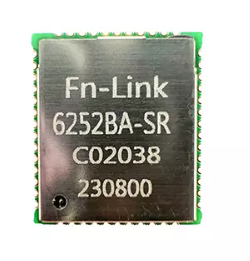
A Wi-Fi module is a compact device that integrates several key components to enable wireless communication. The core elements include:
Wi-Fi Chip: This is the heart of the module, often featuring a radio frequency (RF) front-end and a digital signal processor (DSP). It handles encoding, transmitting, and receiving Wi-Fi signals.
Antenna: Responsible for sending and receiving radio waves, the antenna's design directly impacts signal strength and coverage.
Control Circuitry: This includes interfaces such as UART, SPI, or USB, which connect the module to host devices like microcontrollers or computers. It also manages power and communication protocols.
Firmware: Embedded software that controls the Wi-Fi stack, security protocols, and data handling.
Modules like the popular ESP8266 WiFi module and ESP32 combine these components into a ready-to-use unit, simplifying integration for developers working on projects like Wi-Fi modules for Arduino or IoT Wi-Fi devices.
Initialization: When powered, the module boots up and loads its firmware.
Network Scanning: It scans for available Wi-Fi networks within range.
Authentication: The module connects to a chosen network using credentials (SSID and password).
IP Configuration: It obtains an IP address via DHCP or static configuration.
Data Transmission: Once connected, data packets are sent and received through the module’s RF circuitry.
Communication with Host: The module exchanges data and commands with the host device via serial or other interfaces.
Power Management: Modules may enter low-power modes to conserve energy when idle.
This process allows devices like Raspberry Pi WiFi modules or Wi-Fi shields for microcontrollers to connect seamlessly to wireless networks.
Standard Wi-Fi Modules: Used for general applications requiring reliable connectivity, such as smart TVs or PCs.
Low-Power Wi-Fi Modules: Designed for battery-operated IoT devices needing efficient energy consumption.
Embedded Wi-Fi Modules: Integrated into larger systems, like industrial controllers or home automation hubs.
Development Boards with Wi-Fi: Examples include ESP8266 Wi-Fi boards and Raspberry WiFi modules, popular among hobbyists and professionals.
Ease of Integration: Standard interfaces and pre-certified modules reduce development time.
High Data Rates: Support for modern Wi-Fi standards (802.11n/ac/ax) enables fast communication.
Wide Compatibility: Works with most Wi-Fi networks and devices.
Security Support: Implements encryption standards like WPA2 and WPA3.
Scalability: Supports multiple simultaneous connections, crucial for IoT ecosystems.
Cost-Effective: Modules like the ESP8266 Wi-Fi offer affordable connectivity solutions.
Wi-Fi modules are versatile and used in:
Consumer Electronics: Smart TVs, PCs, and gaming consoles.
IoT Devices: Sensors, smart home gadgets, and wearables.
Industrial Automation: Remote monitoring and control systems.
Automotive: Infotainment and telematics systems.
To integrate a Wi-Fi module:
Connect power and ground pins correctly.
Link communication interfaces (UART, SPI) between the module and host.
Load or configure appropriate drivers and firmware.
Use APIs or AT commands for control and data exchange.
Ensure proper antenna placement for optimal signal.
For example, when adding a Wi-Fi module for embedded systems, developers often rely on serial communication and pre-built libraries to simplify integration.
Wi-Fi modules support various security features to protect data and networks:
Encryption Protocols: WPA2, WPA3, and sometimes VPN support.
Authentication Methods: Passwords, certificates, or enterprise-grade credentials.
Firewall and Access Control: Some modules offer built-in security controls.
Firmware Updates: Regular patches to fix vulnerabilities.
Implementing these mechanisms is crucial, especially for IoT Wi-Fi devices that handle sensitive data.
Selecting the ideal Wi-Fi module is crucial to the success of your project, whether you are working on a Wi-Fi module for Arduino, a raspberry pi WiFi module, or an IoT Wi-Fi device. Here are key factors to consider:
Wi-Fi modules support different standards, such as 802.11n, 802.11ac, or the latest 802.11ax (Wi-Fi 6). Your choice should match the data rate your application demands. For example:
Simple sensor data for IoT Wi-Fi devices may only need 1-10 Mbps.
Streaming video on a Wi-Fi module for TV or fast file transfers on a Wi-Fi module for PC require higher speeds, often above 100 Mbps.
Choosing a module like the ESP8266 WiFi module is suitable for basic IoT projects, while the more advanced ESP32 or dual-band modules better serve high-speed needs.
Power efficiency is vital, especially for battery-powered or embedded systems. Low-power Wi-Fi modules help extend device life. When selecting a Wi-Fi module for embedded systems or portable devices, look for features such as:
Sleep modes and power-saving protocols.
Modules compliant with Wi-Fi 6 low-power optimizations.
For instance, the ESP8266 Wi-Fi is known for its low power consumption, making it popular in IoT applications.
Wi-Fi modules operate typically on 2.4 GHz or dual-band 2.4 GHz and 5 GHz frequencies. Consider:
2.4 GHz offers longer range and better penetration through obstacles but lower speeds.
5 GHz provides higher speeds but shorter coverage.
If your project requires wider coverage, such as a Wi-Fi shield for outdoor use or a raspberry WiFi module in a large area, a dual-band module is preferable.
Some Wi-Fi modules support multiple simultaneous connections, which is important for projects involving many devices or users. For example:
Industrial automation or smart home hubs require modules that can handle high connection density.
Modules like the ESP32 support multiple connections and are scalable for growing networks.
Budget constraints often influence module choice. Factors include:
Module price vs. performance balance.
Availability and supplier reputation.
Support and documentation quality.
Popular modules like the ESP8266 Wi-Fi module offer a low-cost entry point with strong community support, while suppliers such as Espressif, Broadcom, or Qualcomm provide premium options with enhanced features.
Wi-Fi modules and Zigbee modules serve wireless communication but differ significantly in design and use. Wi-Fi modules operate on 2.4 GHz and 5 GHz bands, offering high data rates from tens of Mbps to Gbps. This makes them ideal for bandwidth-intensive tasks like video streaming or cloud connectivity. In contrast, Zigbee modules work primarily on 2.4 GHz with lower data rates, typically suited for low-power sensor networks and self-organizing applications.
Zigbee shines in device connection density and power efficiency, often used in home automation and industrial sensor networks. However, Wi-Fi modules support more devices simultaneously and provide broader coverage, making them better for environments requiring high throughput and extensive connectivity.
Feature | Wi-Fi Module | Zigbee Module |
|---|---|---|
Frequency Range | 2.4 GHz & 5 GHz | 2.4 GHz |
Data Rate | High (tens Mbps to Gbps) | Low to Medium (hundreds kbps) |
Coverage Range | Larger | Smaller |
Power Consumption | Medium to High | Low to Medium |
Device Connection Density | High | Medium |
Common Applications | IoT, streaming, smart devices | Sensor networks, automation |
Bluetooth modules operate mainly at 2.4 GHz frequency and are designed for short-range communication. They are widely used for audio streaming, device pairing, and low-power applications. Bluetooth Low Energy (BLE) especially targets battery-powered devices like wearables.
Wi-Fi modules provide higher data rates and longer range than Bluetooth, making them suitable for applications requiring internet access or large data transfers. Bluetooth modules excel in personal area networks, while Wi-Fi modules fit well in home, enterprise, or public spaces with many connected devices.
Feature | Wi-Fi Module | Bluetooth Module |
|---|---|---|
Frequency Range | 2.4 GHz & 5 GHz | 2.4 GHz |
Data Rate | High (tens Mbps to Gbps) | Low to Medium (hundreds kbps) |
Coverage Range | Larger | Smaller |
Power Consumption | Medium to High | Low to Medium |
Device Connection Density | High | Medium to High |
Common Applications | IoT, PCs, smart TVs, embedded systems | Audio devices, wearables, peripherals |
Choosing a Wi-Fi module over Zigbee or Bluetooth depends on your project’s requirements:
High Data Throughput: For streaming video or fast file transfers, Wi-Fi modules like the ESP8266 WiFi module or Raspberry Pi WiFi module are preferable.
Internet Connectivity: Wi-Fi modules directly connect to IP networks, essential for IoT Wi-Fi devices needing cloud access.
Device Density: If your system needs to support many devices simultaneously, Wi-Fi modules offer better scalability.
Compatibility: Wi-Fi is widely supported across consumer electronics, including PCs, TVs, and embedded systems.
Range and Coverage: Wi-Fi modules provide broader coverage suitable for home automation or industrial environments.
However, if your project prioritizes ultra-low power consumption or operates in mesh networks with simpler data needs, Zigbee or Bluetooth modules might be better.
Smart Home Hub: A Wi-Fi module for embedded systems can connect multiple smart devices to the internet, while Zigbee modules handle low-power sensor networks within the home.
Wearables: Bluetooth modules are ideal due to their low power draw and short-range communication.
Industrial Monitoring: Zigbee modules enable reliable mesh networking among sensors, whereas Wi-Fi modules facilitate high-speed data transfer to central servers.
PC and TV Connectivity: Wi-Fi modules for PC or Wi-Fi modules for TV provide seamless wireless internet access and streaming capabilities.
Successful development starts with solid hardware integration. When working with Wi-Fi modules like the ESP8266 WiFi module or a Wi-Fi shield for Arduino, ensure proper power supply voltage and current are stable. Connect communication interfaces such as UART or SPI correctly between the module and host microcontroller or embedded system. Proper antenna placement is crucial—keep it away from metal enclosures or sources of electromagnetic interference to maximize signal strength. Refer to the module’s hardware manual for pin configurations and recommended circuit layouts.
Once hardware is connected, install and configure the appropriate drivers. Many Wi-Fi modules come with vendor-provided drivers or open-source libraries tailored for platforms like Arduino or Raspberry Pi. Understanding communication protocols—typically serial AT commands or SPI transactions—is essential. For example, the ESP 8266 Wi-Fi module uses AT commands to manage network connections and data transfer. Ensure your firmware or application software correctly handles these protocols to maintain stable communication.
Thorough testing guarantees reliable operation. Begin with connection tests by scanning available networks and authenticating with correct credentials. Use tools to measure signal strength, throughput, latency, and packet loss. Testing both in controlled environments and real-world scenarios helps identify issues like interference or weak signals. For IoT Wi-Fi devices, verify that data transmission remains stable over extended periods.
Common problems include connection drops, slow data rates, or authentication failures. Enable module logging to capture error codes and events. Check power supply stability and antenna integrity. If the module repeatedly fails to connect, verify Wi-Fi credentials and network compatibility. Use protocol analyzers like Wireshark to inspect data packets and spot anomalies. Resetting the module or restoring factory settings can resolve firmware glitches.
Power efficiency is vital, especially for battery-powered or embedded systems. Utilize sleep modes supported by modules such as the ESP8266 Wi-Fi to reduce energy consumption when idle. Implement dynamic power management in your firmware to switch between active and low-power states based on network activity. Monitoring current draw during operation helps optimize power profiles.
Keep your Wi-Fi module’s firmware up to date. Manufacturers often release updates to improve performance, add features, and patch security vulnerabilities. Plan for firmware upgrade mechanisms that minimize downtime and maintain configuration settings. For example, OTA (Over-The-Air) updates are popular in IoT applications, enabling remote firmware deployment without physical access.
Remote debugging tools can significantly reduce development time. By enabling remote access to logs and diagnostics, developers can monitor Wi-Fi module status and troubleshoot issues without on-site intervention. This is especially useful for deployed IoT devices or embedded systems in inaccessible locations. Secure remote debugging ensures data privacy and prevents unauthorized access.
The Wi-Fi module market is vibrant and rapidly evolving, driven by the expanding demand for wireless connectivity in consumer electronics, IoT devices, industrial automation, and smart home applications. Modules like the ESP8266 WiFi module and Raspberry Pi WiFi module have become staples for developers and manufacturers due to their affordability and ease of integration.
As more devices require seamless internet access, the market sees a surge in diverse Wi-Fi modules tailored for specific needs—ranging from low-power modules for battery-operated IoT Wi-Fi devices to high-performance modules for PCs and smart TVs. This growth encourages continuous innovation and competition among suppliers, pushing advancements in speed, power efficiency, and security.
Several key players dominate the Wi-Fi module landscape, each offering unique solutions:
Espressif Systems
Known for the ESP8266 and ESP32 series, Espressif provides cost-effective, highly integrated Wi-Fi modules popular in IoT and embedded systems. Their modules support robust firmware stacks and multiple interfaces, making them favorites for Wi-Fi modules for Arduino and other embedded projects.
Broadcom (Cypress Semiconductor)
Broadcom offers Wi-Fi/Bluetooth combo modules widely used in consumer electronics and industrial applications. Their products emphasize high throughput and reliability, suitable for demanding environments.
Qualcomm Technologies
Qualcomm’s QCA series modules deliver premium performance, focusing on mobile devices, automotive infotainment, and IoT Wi-Fi applications. Their modules often integrate advanced features like dual-band support and enhanced security.
Texas Instruments
TI’s SimpleLink Wi-Fi modules cater to industrial, automotive, and home automation markets. They combine Wi-Fi with other wireless technologies, providing scalable solutions.
Microchip Technology
Microchip’s WINC Wi-Fi modules target embedded systems and IoT devices, offering easy integration and low power consumption.
Murata Manufacturing
Murata provides compact Wi-Fi modules with customized antenna designs, ideal for space-constrained applications.
u-blox
u-blox focuses on in-vehicle communications and industrial IoT, delivering modules with high reliability and security features.
NXP Semiconductors
NXP’s Wi-Fi modules are optimized for automotive, smart home, and industrial sectors, emphasizing interoperability and long-term support.
The market continually embraces new technologies:
Wi-Fi 6 and Wi-Fi 7 Adoption
Modules now support these latest standards, offering faster speeds, better device density handling, and improved power efficiency.
Integration of AI and Mesh Networking
Some modules incorporate AI-driven channel management and mesh capabilities, enhancing network robustness and user experience.
Miniaturization and Power Optimization
Suppliers push for smaller form factors and lower power consumption, crucial for IoT Wi-Fi and embedded systems.
Enhanced Security Features
With rising cybersecurity concerns, modules increasingly support WPA3 encryption, secure boot, and firmware update mechanisms.
Selecting a supplier depends on project requirements:
Performance Needs: High-speed applications like Wi-Fi modules for PC or TV benefit from suppliers offering advanced chipsets and dual-band support.
Power Efficiency: For IoT Wi-Fi and embedded systems, prioritize modules with low-power modes and efficient firmware, such as those from Espressif or Microchip.
Certification and Compliance: Choose suppliers whose modules come pre-certified for global standards (FCC, CE, RED), reducing time-to-market.
Support and Ecosystem: Strong documentation, community support, and software development kits ease integration, especially for Wi-Fi boards and shields.
Cost Considerations: Budget constraints may guide selection toward cost-effective modules like the ESP8266 WiFi module, balancing features and price.
Wi-Fi modules continue to evolve alongside the latest Wi-Fi standards. The adoption of Wi-Fi 6 (802.11ax) and emerging Wi-Fi 7 (802.11be) brings significant improvements in speed, capacity, and efficiency. These newer protocols support higher data rates, reduced latency, and better performance in crowded environments, making them ideal for dense IoT deployments and smart devices.
Wi-Fi 7, for instance, introduces multi-link operation, allowing devices to communicate over multiple frequency bands simultaneously (2.4 GHz, 5 GHz, and 6 GHz). This enhances throughput and reliability, which benefits applications like streaming on a Wi-Fi module for TV or fast data transfers on a Wi-Fi module for PC.
Artificial Intelligence (AI) is becoming a key element in Wi-Fi modules. AI-powered algorithms optimize channel selection, interference mitigation, and power management. This intelligent adaptation improves connection stability and user experience, especially in complex environments.
Mesh networking is also gaining traction. Wi-Fi modules can now form self-healing, scalable mesh networks that extend coverage without additional wiring. This is highly beneficial for smart homes and industrial IoT systems, where multiple devices communicate efficiently. Modules like the ESP8266 WiFi module and ESP32 are increasingly supporting mesh protocols, enabling seamless device-to-device communication.
The rise of IoT drives new demands for Wi-Fi modules. Beyond traditional connectivity, modules now support edge computing and local data processing. This reduces latency and bandwidth needs, crucial for real-time applications like smart security cameras or industrial sensors.
Smart appliances, wearables, and embedded systems increasingly rely on Wi-Fi modules to provide reliable, low-latency connections. For example, a Wi-Fi module for embedded systems can enable remote monitoring and control in healthcare or agriculture.
Furthermore, Wi-Fi modules are integrating with other wireless technologies like Bluetooth and Zigbee to create versatile multi-protocol devices, expanding their usability in diverse smart environments.
Power efficiency remains a top priority, especially for battery-powered IoT devices. New Wi-Fi modules incorporate advanced power-saving features, such as Target Wake Time (TWT) in Wi-Fi 6, which schedules communication times to minimize energy use. This extends the battery life of devices like sensors and wearables.
Security enhancements are also evolving. Support for WPA3 encryption and secure boot processes is becoming standard. Firmware update mechanisms improve to allow safer, over-the-air (OTA) updates, protecting devices from vulnerabilities without downtime. These features are essential for IoT Wi-Fi devices handling sensitive data.
Wi-Fi modules enable wireless connectivity for various devices, offering ease of integration and high-speed communication. Choosing the right module depends on speed, power, and coverage needs. Staying updated with the latest Wi-Fi standards and security features ensures optimal performance. FN-LINK TECHNOLOGY LIMITED provides reliable Wi-Fi modules that combine advanced technology with cost-effectiveness, delivering value for embedded systems and IoT applications. Their products support seamless integration, robust security, and efficient power management for diverse wireless projects.
A: A Wi-Fi module is a compact device that enables wireless communication by integrating a Wi-Fi chip, antenna, control circuitry, and firmware. It works by scanning networks, authenticating, obtaining an IP address, and transmitting data, allowing devices like the ESP8266 WiFi module or Raspberry Pi WiFi module to connect to wireless networks.
A: Wi-Fi modules such as the ESP8266 WiFi module offer easy integration, low power consumption, and reliable connectivity, making them ideal for IoT Wi-Fi devices and embedded systems requiring wireless internet access and efficient data transmission.
A: Integration involves connecting power and communication interfaces (UART, SPI) between the Wi-Fi module and the host device, loading appropriate firmware or drivers, and using APIs or AT commands. Modules like the Wi-Fi module for Arduino simplify this process with pre-built libraries.
A: Wi-Fi modules for PC or Wi-Fi module for TV provide high-speed wireless internet access, support modern Wi-Fi standards, and ensure secure connections, enabling seamless streaming and online activities without cables.
A: The ESP8266 WiFi module offers higher data rates, broader coverage, and better device connection density compared to Bluetooth and Zigbee, making it suitable for internet-connected IoT Wi-Fi devices and embedded systems requiring fast and scalable wireless communication.
